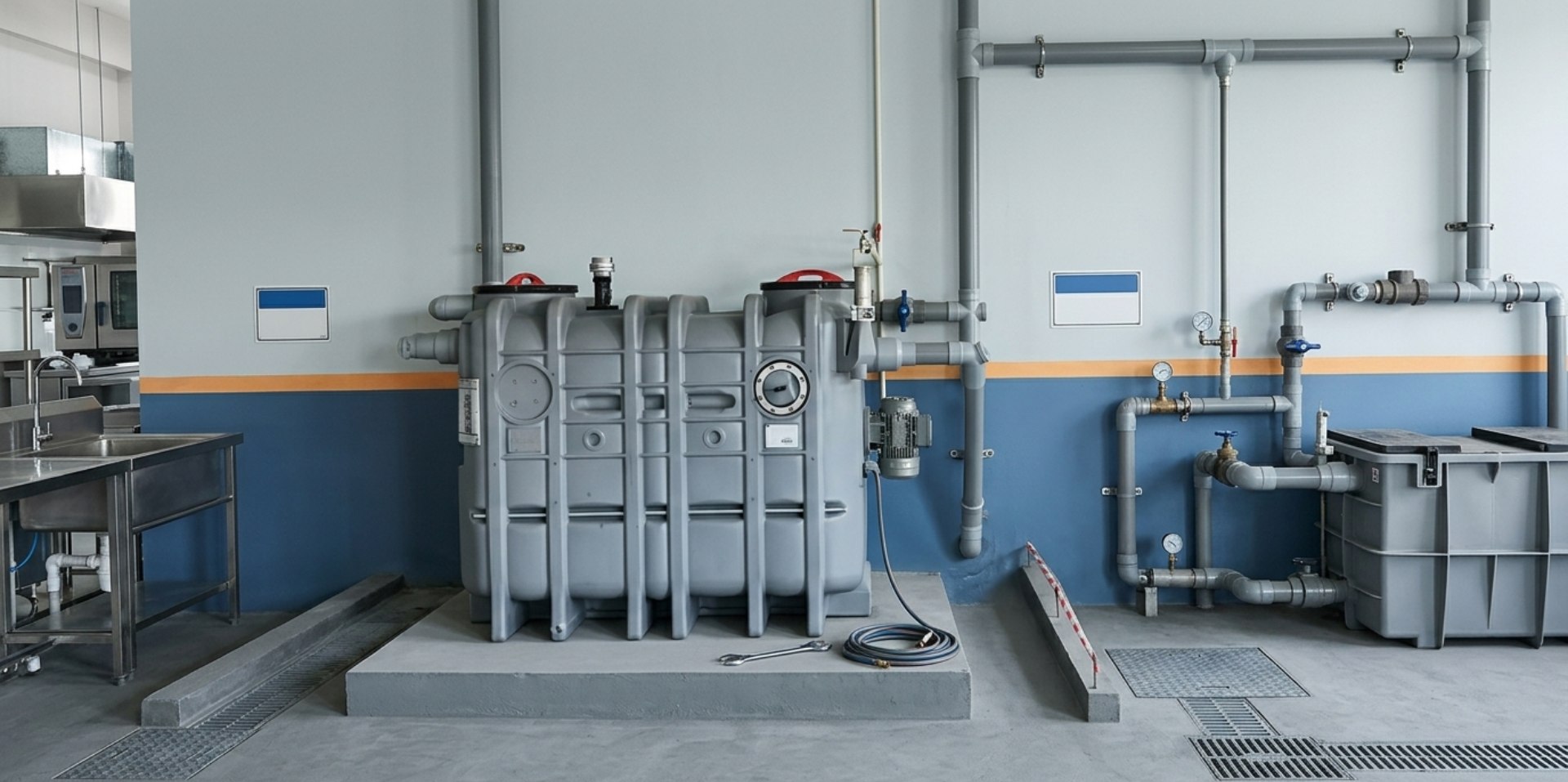
Cleaning a kitchen grease trap is a critical maintenance task for any commercial kitchen or food processing facility. Proper maintenance prevents foul odors, drain blockages, and costly fines from local environmental authorities.
Here is a comprehensive breakdown of professional grease trap cleaning service details:
Core Service Offerings
A standard professional cleaning service typically includes the following steps to ensure the system is fully operational and compliant:
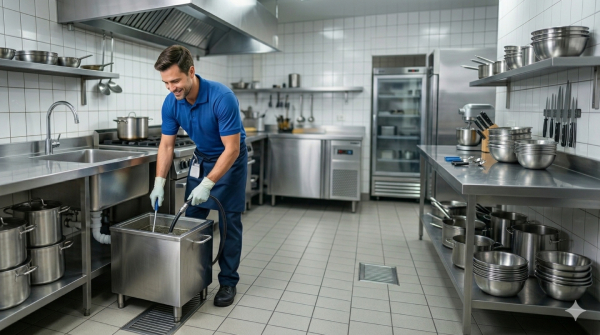
Complete Pump-Out: Total removal of all liquid and solid waste (fats, oils, grease, and settled food solids).
Scraping & Cleaning: Thoroughly scraping the side walls and baffles to remove hardened grease buildup that pumping alone might miss.
Inlet & Outlet Inspection: Checking the baffles and pipes to ensure there are no obstructions and that the flow is restricted correctly.
Odor Control: Application of specialized treatments or sealing gaskets to minimize unpleasant smells during and after the service.
Waste Documentation: Providing a manifest or service report as proof of proper disposal for health department and environmental inspections.
Benefits of Regular Maintenance
Staying ahead of the buildup offers several long-term advantages for a business:
Prevents Backups: Routine cleaning ensures that wastewater flows freely, preventing the “nightmare scenario” of a kitchen sink backing up during a busy shift.
Compliance: Most municipalities require periodic cleaning (often every 30 to 90 days) to keep grease out of the public sewer system.
Cost Savings: It is significantly cheaper to maintain a trap than to pay for emergency plumbing repairs or hydro-jetting of the main sewer line.
Environmental Protection: Professional services ensure that the waste is transported to a licensed facility for recycling or proper disposal rather than contaminating local waterways.
Signs You Need Immediate Service
If a kitchen is experiencing any of the following, the grease trap likely needs attention immediately:
Slow Drainage: Sinks are taking longer than usual to clear.
Persistent Odors: A strong, rancid smell that doesn’t go away with standard cleaning.
Grease in the Line: If grease is visible in the secondary drainage lines, the trap is already “at capacity.”
Key Features
- Complete grease trap cleaning
- Regular maintenance schedules
- Prevent drain blockages
- Eco-friendly cleaning agents
- Restaurant and hotel services
- Emergency cleaning available
Gallery Images

Get In Touch
Related Posts